AI-Assisted vs AI-Executed Hiring:
Why AI Interviewers Matter
Hiring teams are investing in AI with the expectation of faster, more efficient recruitment. Yet for many organizations, hiring delays remain unchanged. The reason is not a lack of technology, but a gap between support tools and true execution.
Many platforms improve visibility through resume ranking, recommendations, and workflow insights. However, these systems often leave screening capacity, interview coordination, and candidate movement dependent on manual effort.
This is where the difference becomes clear. An AI interviewer moves early-stage evaluation from human scheduling to system-led execution, helping teams increase speed and consistency without adding operational strain.
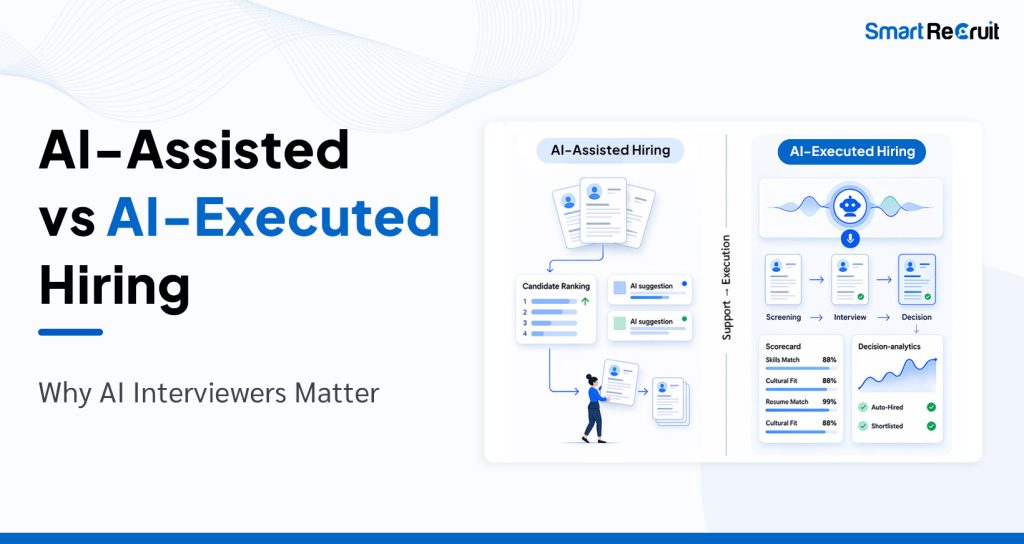
The real divide is not whether companies use AI. It is how AI is applied in hiring. AI-assisted hiring supports existing workflows, while AI-executed hiring improves how those workflows run.
In this article, we explore why AI interviewers matter, where shallow AI narratives fall short, and how Smart Recruit applies execution-focused hiring in practice.
Why Most AI Hiring Tools Still Stop at Assistance
Most hiring teams already use some form of AI hiring tools. These systems can rank applicants, summarize resumes, highlight skill matches, and recommend next steps. In many cases, they improve speed at the information layer and help recruiters process larger candidate volumes.
Some organizations mistake AI hiring tools for full execution systems, when they are often designed to support rather than replace manual workflows.
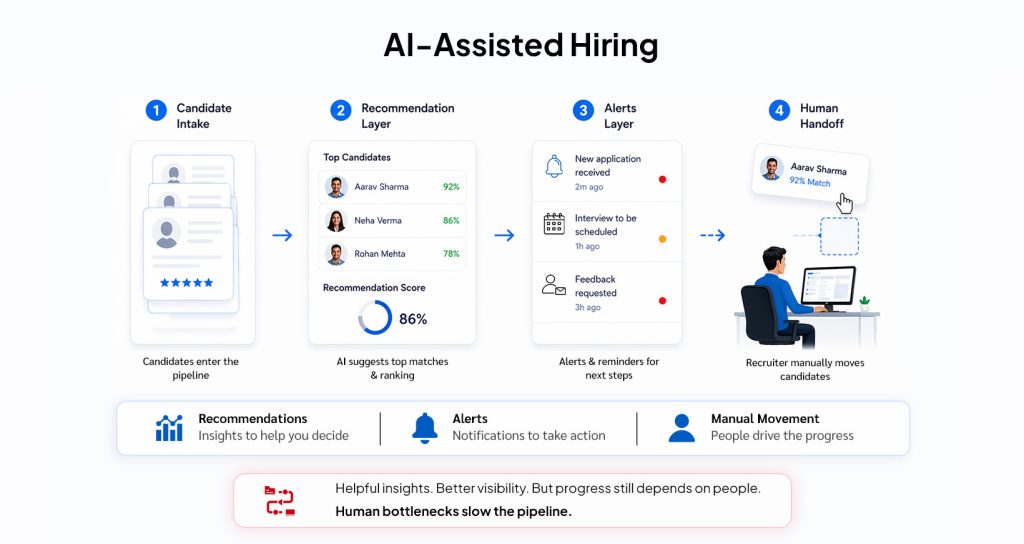
However, support is not the same as execution. Even after recommendations are generated, recruiters still need to review profiles, schedule interviews, coordinate with hiring managers, and move candidates through each stage manually. The workflow remains dependent on people.
This is where many AI hiring tools stop. They make hiring data easier to manage, but they do not remove the operational bottlenecks that delay outcomes. If ten qualified candidates are identified today, someone still needs to act quickly before momentum is lost.
Without a connected AI interview platform, recruiters still absorb most coordination work after recommendations are made.
According to SHRM, employers increasingly want AI across the hiring cycle while maintaining clear human oversight. That signals a broader shift: businesses want automation that drives speed, not just insights.
The limitation of AI-assisted hiring is not intelligence. It is a dependency. When execution still relies on manual coordination, recommendations alone do not create faster hiring.
This is why many teams begin exploring recruitment automation beyond recommendation engines alone.
Where Human Dependence Still Slows Hiring Decisions
Many hiring teams assume delays come from talent shortages or weak sourcing. In reality, hiring often slows after strong candidates have already been identified.
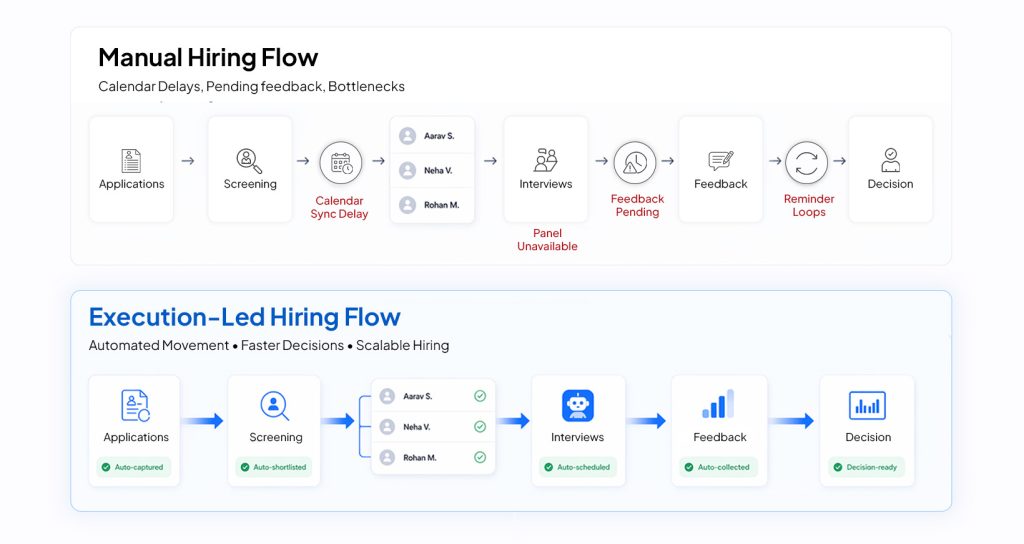
Recruiters still need to schedule interviews, collect feedback, and align calendars across multiple decision-makers. Even when qualified candidates are ready to move, progress can pause because someone is unavailable or responses are delayed.
The same issue affects AI resume screening outputs, where strong candidates are identified but not progressed quickly enough. As hiring volume increases, recruiter workload rises, recruiter productivity drops, and time-to-hire reduction becomes harder to achieve.
This also limits the value of AI screening, because insights lose momentum when execution is delayed. Research from PMC shows stronger outcomes often come when repetitive execution is automated while people focus on judgment and final hiring decisions.
The issue is not human oversight. It is manual coordination. Reducing that friction is one of the fastest ways to make hiring more scalable.
How AI Interviewers Turn Screening Into Execution
AI-executed hiring changes one of the slowest stages in recruitment: the screening interview. Instead of waiting for recruiter calendars or repeated first-round calls, an AI interviewer can conduct interviews on demand and help qualified candidates progress faster without operational delay .
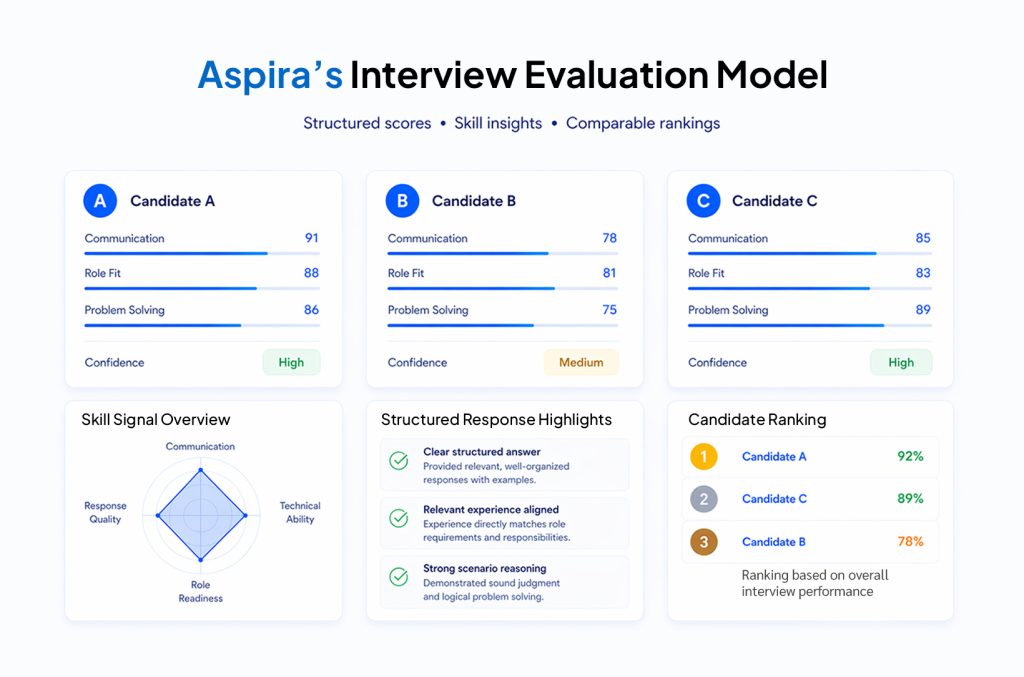
This is where an AI interviewer creates real value. It runs structured interviews based on role criteria, asks consistent questions, and captures responses in a format that is easier to compare. Every candidate is assessed through the same framework, improving fairness and consistency.
For growing teams, this creates a repeatable AI interview platform that scales without increasing manual effort. Candidates can complete AI interviews when available, rather than waiting days for coordination, while recruiters spend more time reviewing qualified talent.
This is the shift from assistance to execution. AI screening becomes an operating layer that advances hiring instead of a dashboard that waits for people to act.
Smart Recruit brings this model to life through Aspira, an AI interviewer engine built for scalable first-round AI interviews. It combines structured evaluation, faster hiring, and stronger decision readiness for modern teams.
For enterprise teams, this means first-round capacity can scale without adding recruiter bandwidth, while hiring quality remains consistent.
Why AI Interviews Create Better Hiring Signals
Many hiring systems generate recommendations, but recommendations alone do not always improve decisions. What hiring teams need are stronger signals that are consistent, comparable, and ready to act on. This is where AI interviews create a clear advantage.
Unlike many AI hiring tools, AI interviews generate evidence through direct interaction rather than only profile analysis.
Traditional first-round calls often vary by interviewer, time pressure, and note quality. Different candidates may be asked different questions, making fair comparison harder. AI interviews solve this by using a structured framework where every candidate is assessed against the same role criteria.
That consistency improves signal quality. Recruiters receive clearer responses, standardized scoring, and better evidence to support faster hiring decisions. Instead of relying on fragmented notes or memory, teams can compare candidates using the same benchmark.
That makes AI interviews especially valuable for faster hiring decisions in high-volume environments.
According to LinkedIn’s Future of Recruiting research, employers are increasingly prioritizing AI tools that improve both efficiency and hiring quality. The biggest gains often come when AI supports execution, not just recommendations.
This is why AI interviews matter. They do not just add more data. They create stronger hiring signals that improve speed, fairness, and confidence in every shortlist.
The best AI interview platform turns those signals into action, not just reporting.
Humans Should Govern, Not Coordinate
The best use of AI in hiring is not replacing people. It is redefining where people create the most value. Humans should own hiring standards, approval thresholds, candidate experience, and final hiring decisions. Those responsibilities require judgment, accountability, and business context.
What slows hiring is different. Recruiters and managers often spend time scheduling interviews, chasing feedback, repeating first-round screens, and managing handoffs across teams. These are coordination tasks, not decision tasks.
When systems handle repetitive execution, governance becomes stronger. Leaders can focus on candidate quality, fairness, and business fit instead of administrative movement. Recruiters improve recruiter productivity by spending more time evaluating talent and less time managing process friction.
Recruitment automation creates the most value when it removes repetitive coordination work such as scheduling, reminders, and handoffs while keeping people in control of final hiring decisions.
It also improves hiring scalability without expanding recruiter headcount at the same pace.
The goal is simple: let people govern the process, while technology manages the repetitive work that slows it down.
This allows leadership teams to focus on talent quality and growth planning instead of operational friction.
How Smart Recruit Applies AI Execution in Practice
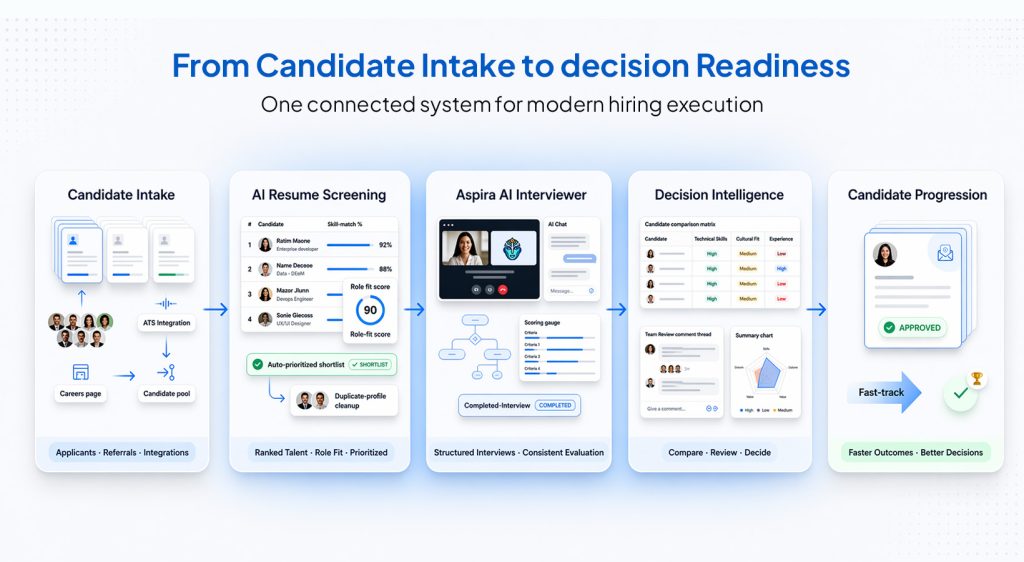
Smart Recruit AI hiring platform is built for teams that need hiring execution, not just more visibility. Instead of functioning as another dashboard, it helps organizations move qualified candidates through the pipeline faster and with greater consistency.
The process begins by structuring candidate data early. Resumes and applicant information become organized signals that are easier to review, compare, and prioritize. This supports faster shortlists and improves AI resume screening outcomes without adding manual effort.
Next comes repeatable evaluation. Through Aspira, early-stage AI interviews can be system-run using role-specific criteria and standardized scoring. Every candidate is assessed through the same framework, improving fairness while reducing delays caused by calendar coordination.
Feedback is then brought into one decision-ready view. Recruiters and hiring managers can compare responses, review candidate signals, and make faster hiring decisions without chasing notes across tools or inboxes.
This is where Smart Recruit AI interviewer capabilities stand out. Unlike traditional hiring software that mainly tracks activity, Smart Recruit is designed to improve how hiring decisions happen through faster execution, stronger consistency, and better candidate progression.
For a deeper look at this model, explore how Smart Recruit builds decision-driven hiring.
Final Takeaway
AI-assisted hiring can improve visibility, but AI-executed hiring improves outcomes. An AI interviewer matters because it owns early interviews instead of only recommending next steps. That shift reduces delays, improves consistency, and helps teams achieve faster hiring at scale.
An AI interviewer supported by recruitment automation creates stronger long-term hiring efficiency and predictable growth capacity.
Smart Recruit AI hiring platform combines automated execution with human control, so decisions stay accountable while workflows move efficiently.
Explore how Smart Recruit hiring automation works in practice. Contact Us for a 2-Week Free Trial.
FAQs
1. What is the difference between AI-assisted hiring and AI-executed hiring?
AI-assisted hiring gives recommendations such as resume ranking, summaries, or next-step suggestions. AI-executed hiring goes further by completing tasks like screening interviews, evaluations, and candidate progression automatically. Assistance supports recruiters, while execution removes manual bottlenecks and improves hiring speed.
2. How does an AI interviewer improve the screening interview process?
An AI interviewer conducts structured first-round interviews using consistent questions and scoring criteria. It reduces scheduling delays, standardizes candidate evaluation, and captures comparable responses. Recruiters can review qualified candidates faster instead of spending time on repetitive screening calls.
3. Are AI interviews better than traditional first-round screening calls?
AI interviews are often better for early-stage screening because they improve speed, consistency, and scalability. Every candidate receives the same evaluation framework, reducing rushed assessments or interviewer variation. Human interviews still remain valuable in later stages for judgment and culture fit.
4. What should businesses look for in an AI interview platform?
Businesses should look for structured scoring, role-based customization, easy integration, bias controls, reporting, and a strong candidate experience. The best AI interview platform should improve decision quality while reducing recruiter workload and time-to-hire.
5. How does recruitment automation improve recruiter productivity and hiring speed?
Recruitment automation handles repetitive tasks such as screening, scheduling, reminders, and workflow updates. This allows recruiters to focus on candidate engagement and decision-making. The result is higher recruiter productivity, faster shortlists, and shorter hiring cycles.
Related Posts
Discover other posts that deepen your understanding of smart hiring, from AI-led interviews to streamlined candidate management techniques.
-
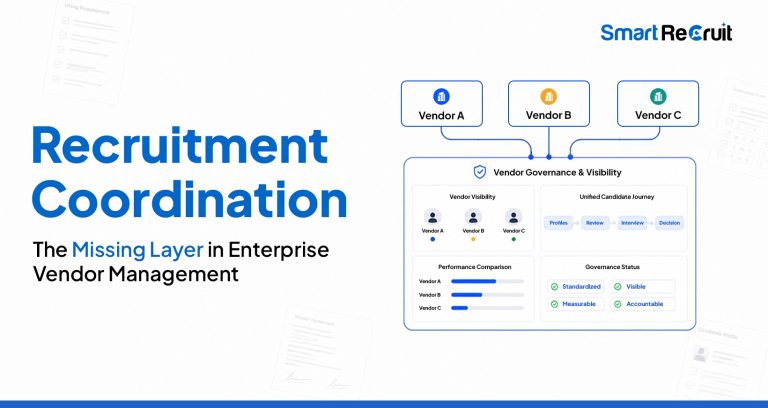 Recruitment Coordination
The Missing Layer in Enterprise Vendor Management
-
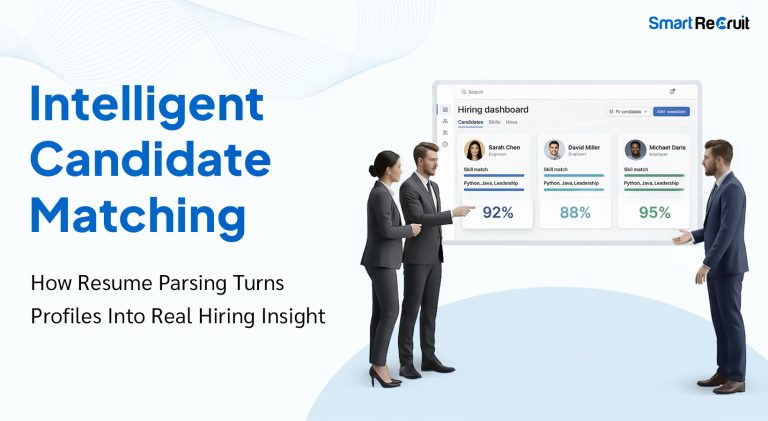 Intelligent Candidate Matching:
How Resume Parsing Turns Profiles Into Real Hiring Insight