HR Audit Checklist for 2026
How to Create Audit-Ready Hiring Decisions
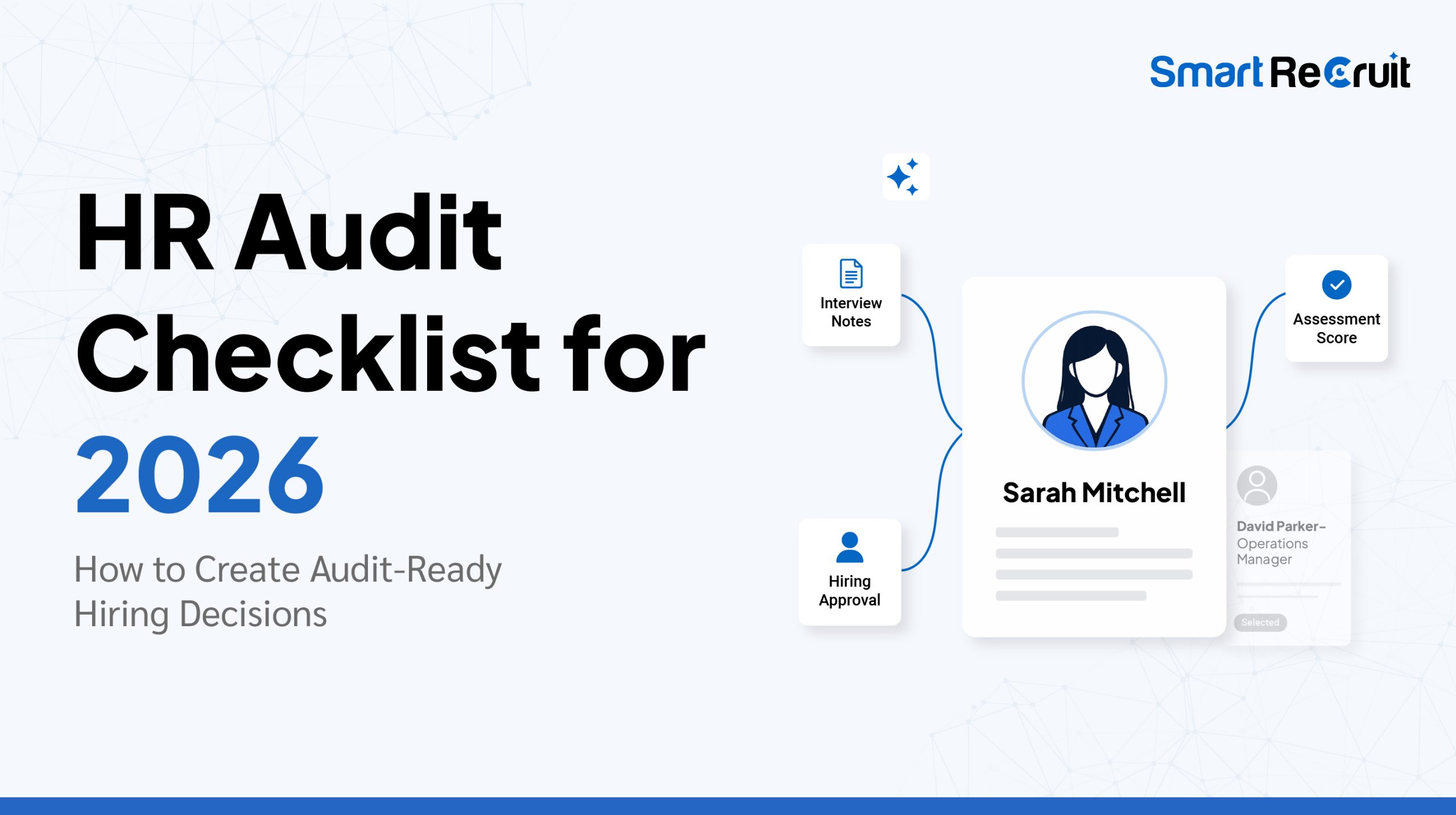
Hiring decisions are facing more scrutiny than they did even two years ago. AI-assisted screening tools, evolving data protection regulations, and tighter internal governance are converging on the same question: can your organization explain, with evidence, why a specific candidate was selected over another?
For most companies, the honest answer is no. A hiring decision made six months ago often cannot be reconstructed. The interviewer’s notes are gone. The scoring rationale lived in someone’s head. This is exactly the gap a proper HR audit checklist is designed to close. It is not a compliance formality. It is operational insurance for every hiring decision your organization makes.
This matters more in 2026 than it did even a year ago. As more of the early hiring process shifts to AI-assisted tools, the question auditors and regulators ask is changing too. It is no longer just “did you hire fairly,” but “can you prove it, consistently, for every candidate.” An HR audit checklist built for that standard looks different from one built for a paper-based world.
Why HR Policies Are the First Thing Auditors Check
Every HR audit starts at the same place: policy, not individual hiring decisions. Before an auditor looks at a single candidate file, they look at whether your HR policies are documented, current, and consistently applied across the organization.
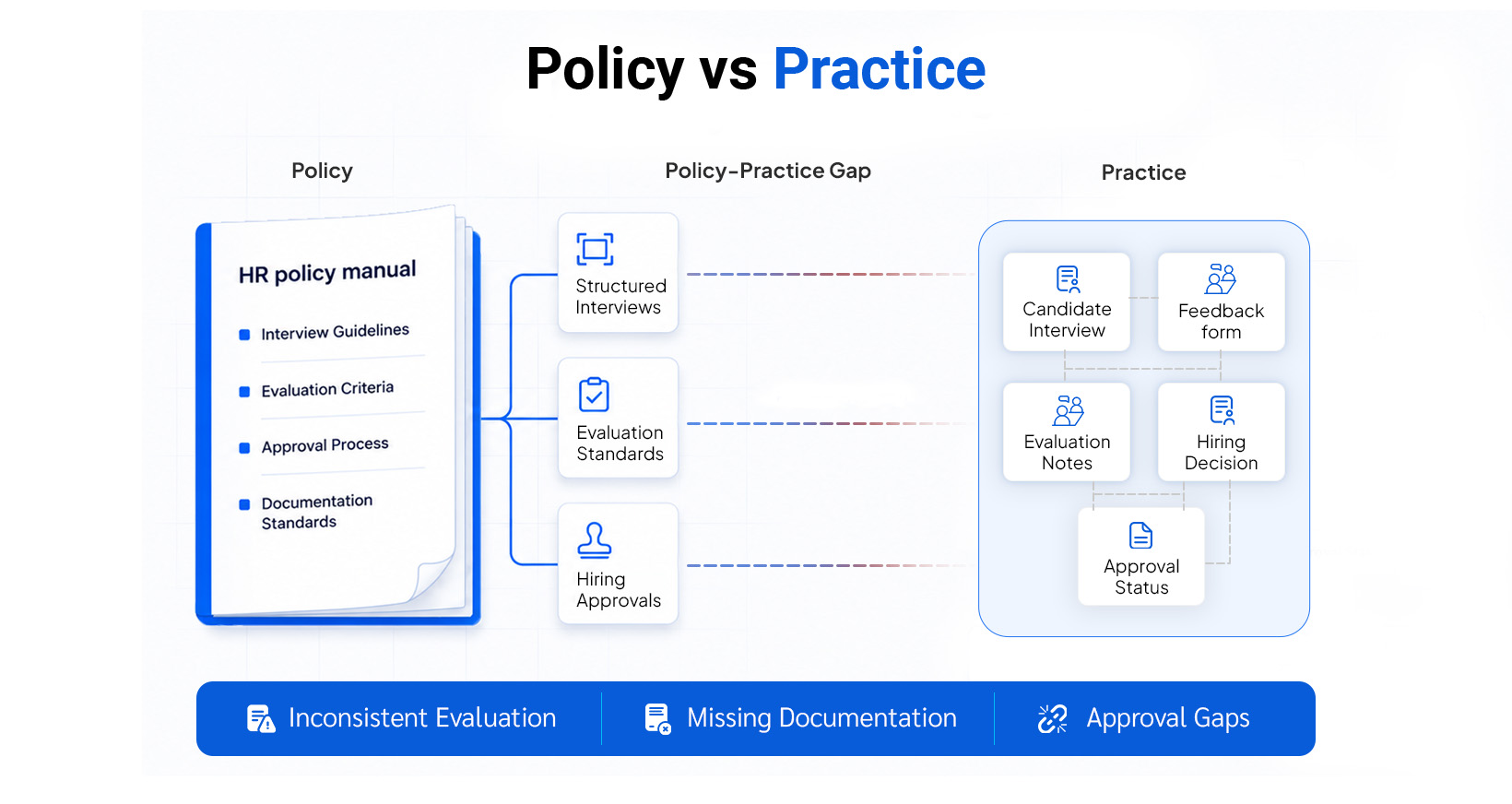
This is where most companies run into trouble. Policies exist on paper, but they are rarely operationalized into the actual hiring workflow. A policy that says “all candidates must be evaluated against the same criteria” means little if recruiters and hiring managers are not actually following it day to day. According to SHRM’s HR audit framework, a credible audit begins by checking whether documented policy and actual practice match, not by assuming the written policy reflects what happens in interview rooms.
The HR audit checklist most organizations use treats this as a one-time exercise completed during onboarding, then forgotten. That approach fails the moment a real audit happens, because policy review needs to be continuous, not a box checked once and revisited only under pressure.
Building an HR audit checklist around this principle changes how policy gets treated. It stops being a document filed away after onboarding and becomes the standard every hiring decision gets measured against.
Auditing the Selection Process for Consistency
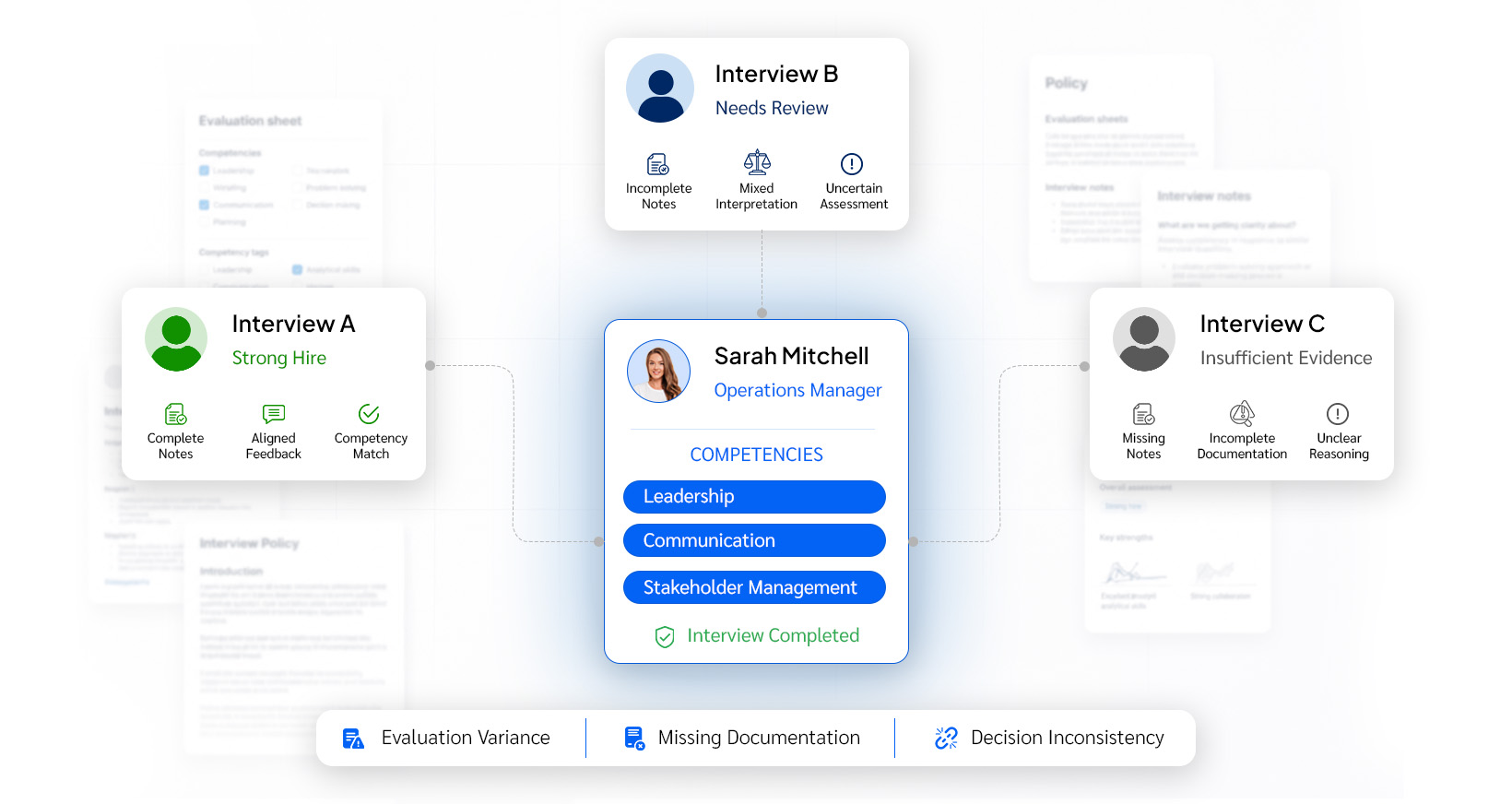
If policy is the foundation, the selection process is where audit failures actually concentrate. This is the layer auditors scrutinize most closely, because it is where inconsistency becomes visible. Different interviewers ask different questions. Scoring is subjective and undocumented. One panel’s “strong yes” means something different from another panel’s.
A selection process that would survive an HR audit checklist review looks different. The same criteria are applied to every candidate being considered for a given role. Reasoning is documented at each stage, not reconstructed afterward from memory. There is a traceable decision trail from application to offer that anyone, including someone who was not in the interview room, can follow and understand.
This is also exactly where AI-assisted hiring tools either help or actively work against you. A structured, AI-led evaluation that applies the same questions and scoring logic to every candidate is inherently auditable. Ad hoc human judgment without documentation is not, no matter how good the final hiring decision turns out to be. This is the part of an HR audit checklist that gets overlooked most often. Organizations document policy. They rarely document the selection process itself, stage by stage, in a way that would hold up if someone outside the hiring team needed to review it.
SHRM’s research on AI in recruitment points to the same conclusion: structure and consistency, not just speed, are what make AI-assisted hiring defensible at audit time.
Policy Documentation and Workplace Compliance Gaps
Process is what happens. Documentation is the evidence that it happened. This is the layer auditors actually request when a hiring decision gets questioned, whether internally by leadership or externally by a regulator.
Under any real HR audit checklist, the documents that matter here are specific: job descriptions tied to the role as it was actually advertised, interview scorecards, written rejection reasoning, and a clear record of who approved the final decision. Workplace compliance is not only about avoiding legal exposure. It is about being able to produce this evidence on request, quickly, without scrambling.
The common failure pattern is not that documentation never existed. It is that it exists in fragments, scattered across email threads, personal drives, and verbal handoffs between recruiters and hiring managers. None of it is centralized. None of it is easily retrievable months later. For organizations hiring across borders, this gap becomes sharper. The European Data Protection Supervisor’s guidance on recruitment data makes clear that candidate data handling during selection carries its own documentation and retention obligations, separate from the hiring decision itself.
A working HR audit checklist treats policy documentation as infrastructure, not paperwork. If evidence cannot be retrieved in minutes, it does not functionally exist for HR audit checklist purposes.
Why Employee Documentation Determines Audit Outcomes
Zoom further, from process-level documentation to the individual candidate’s record, and this is where specific hiring decisions get defended or exposed. Employee documentation at this level includes interview notes, structured assessment scores, panel feedback, and the final written rationale for why one candidate was chosen over others.
Here is a useful test. Take any hiring decision from six months ago. Could someone who was not in the room reconstruct exactly why that candidate was selected, using only what was documented at the time? For most organizations, the answer is no. That gap is not just a record-keeping problem. It is the difference between a hiring decision that can be defended and one that is quietly exposed.
This is precisely where HR documentation either protects an organization or leaves it vulnerable. Good documentation does not need to be elaborate. It needs to exist, be specific to the decision, and be retrievable without depending on one person’s memory.
This is ultimately the test any HR audit checklist needs to pass. Not whether documentation exists somewhere, but whether it can be produced, intact and specific, without relying on the one person who happened to remember the details.
See how Smart Recruit keeps every interview and evaluation audit-ready from day one. Start your 2-Week Free Trial
How Smart Recruit Builds Audit-Ready Hiring Decisions
Every gap raised so far, inconsistent selection processes, scattered policy documentation, unrecoverable employee records, traces back to the same root cause: hiring decisions that depend on memory instead of structure.
Smart Recruit is built around closing that gap directly. Structured interviews conducted through Aspira mean every candidate for a given role is evaluated against the same documented criteria, every time, regardless of which recruiter or panel is involved. That consistency is exactly what most HR audit checklist failures trace back to.
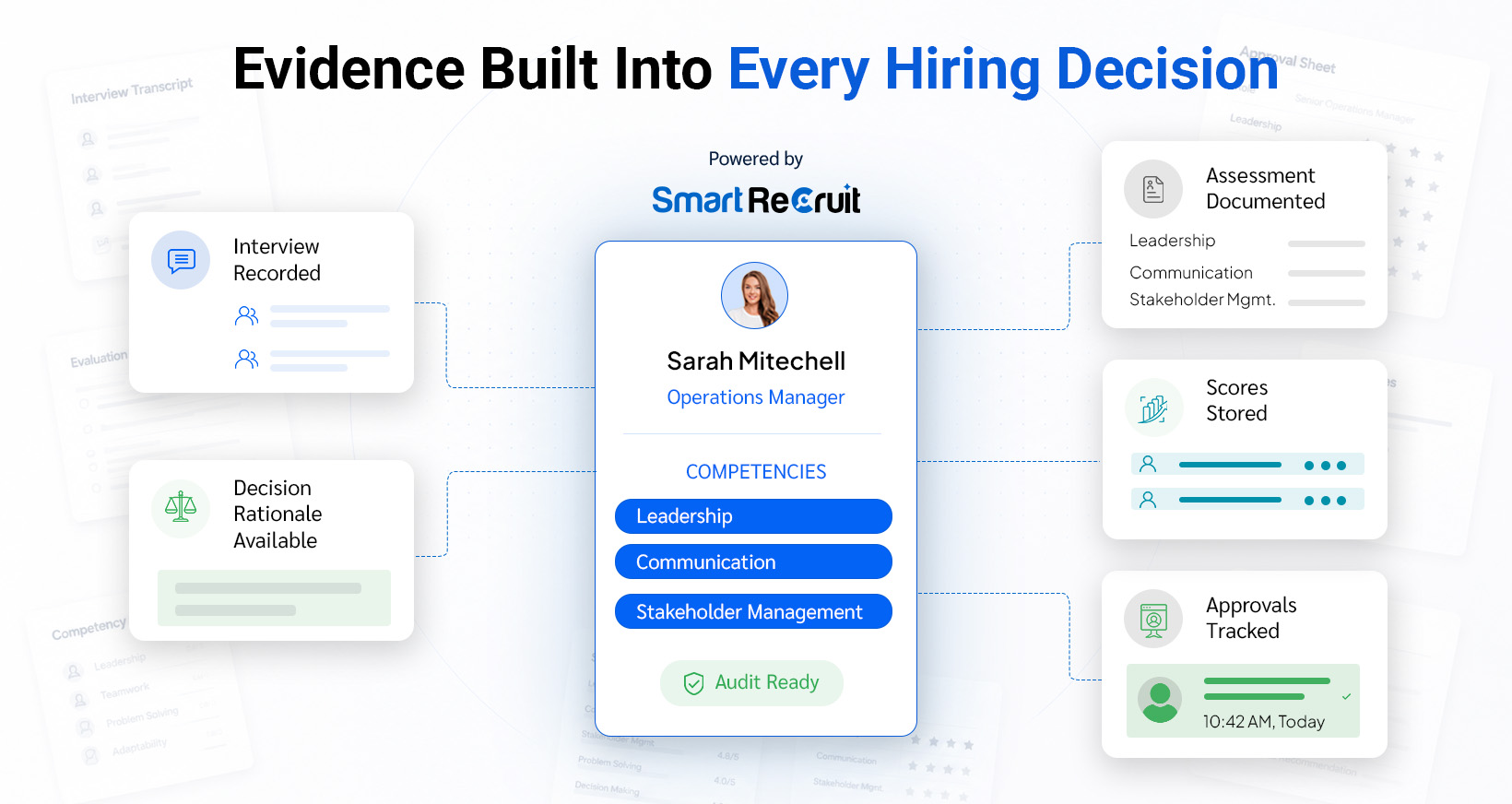
Every interview, score, and evaluation on the platform is automatically logged and timestamped as part of the hiring workflow itself, not as a separate documentation task someone must remember to complete. That solves the fragmentation problem raised in the documentation sections above. When a hiring decision needs to be reconstructed, whether for an internal review or an external audit, the evidence already exists in one place.
Smart Recruit does not just support your HR audit checklist. It generates evidence for it automatically, as a natural byproduct of how hiring already happens on the platform. This is a fundamentally different approach than the ATS-only model many organizations still rely on, which tracks where a candidate is in a pipeline but says nothing about the quality or consistency of the evaluation that got them there. Aspira’s structured interview approach is what makes that evidence trustworthy in the first place.
Final Takeaway
An HR audit checklist should not be treated as a defensive document you produce only when challenged. It is a sign of operational maturity, and increasingly, a baseline expectation rather than a competitive advantage. Organizations that can produce hiring evidence instantly move faster when questioned, whether by regulators, internal legal teams, or their own leadership asking hard questions about a hiring decision.
The organizations that get this right are not the ones with the most paperwork. They are the ones whose hiring process generates the evidence automatically, without extra effort, as a result of how hiring actually happens day to day.
Ready to make every hiring decision audit-ready? Contact Us to see how Smart Recruit builds the evidence in from day one.
FAQs
What should an HR audit checklist include?
A working HR audit checklist covers four layers: documented HR policies that match actual practice, a consistent selection process applied to every candidate, retrievable policy documentation, and individual employee documentation that explains specific hiring decisions.
How often should HR policies be reviewed for compliance?
Most organizations review HR policies annually at minimum, with workplace compliance checks triggered any time hiring volume, regulations, or evaluation methods change significantly.
What documentation is required to defend a hiring decision?
An HR audit checklist treats defensible employee documentation as interview scorecards, structured assessment results, panel feedback, and a written rationale for the final decision, all tied to the specific role and candidate.
How do you audit a selection process for consistency?
Auditing a selection process means checking whether every candidate for a role faced the same questions, the same scoring criteria, and a documented decision trail, regardless of which recruiter or panel conducted the interview.
Can AI-assisted hiring tools support HR audit compliance?
Yes. Structured AI-led interviews apply identical questions and scoring logic to every candidate, which creates the kind of consistent, traceable policy documentation that manual interviews often lack.
Related Posts
Discover other posts that deepen your understanding of smart hiring, from AI-led interviews to streamlined candidate management techniques.
-
 Aspira: Turn First Interviews Into a Hiring Advantage
This is where Aspira changes the equation.
-
 AI Hiring Platforms:
Why They Fail at Scale and How Smart Recruit Builds Decision-Driven Hiring